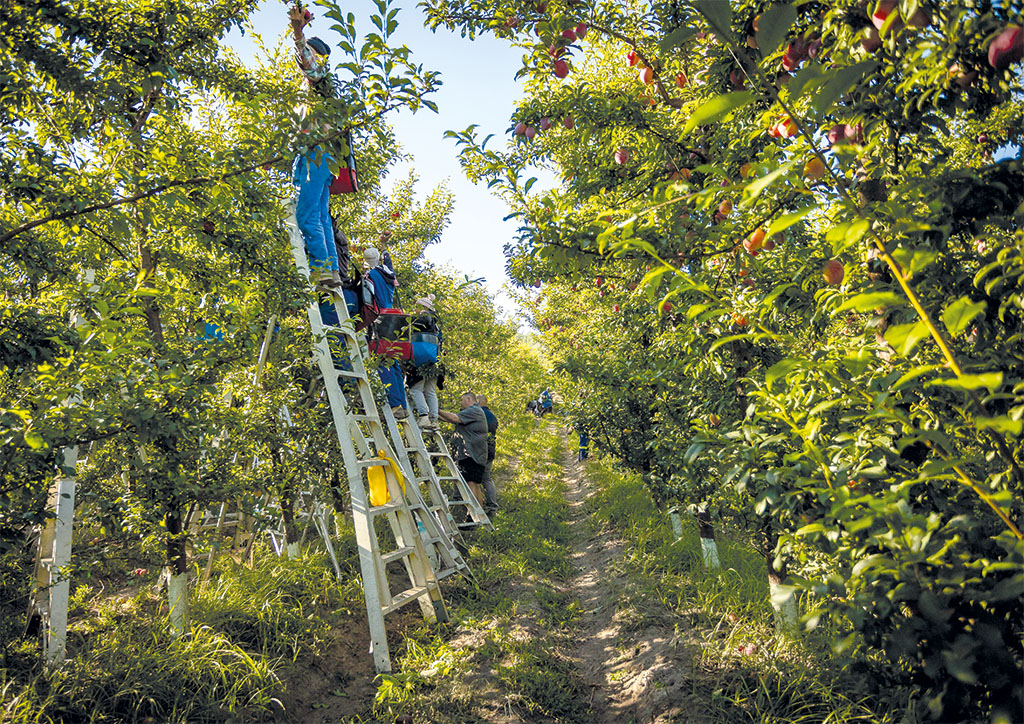
Are we heading for the true sustainability that lies on the far side of audits? By Anna Mouton.
“It doesn’t help to have all these sustainability requirements in place, but they don’t make a difference,” says Albert Coetzee, Industry Affairs Manager at the Citrus Growers’ Association. “Creating more paperwork isn’t the point of the exercise.”
With approximately 100 000 hectares under cultivation and more than R25 billion in annual exports, citrus is the largest South African fruit sector. Almost half of their exports go to the United Kingdom and Europe, so Coetzee keeps a close watch on the evolving demands of these markets.
At the same time, he believes that regulators and retailers are moving past box-ticking to true sustainability. He recently shared his reasons for optimism with Fresh Quarterly.
The Vision for Food and Agriculture
In 2020, the European Union introduced their Green Deal, a set of policies aimed at reaching climate neutrality by 2050. One of its programmes was the Farm to Fork strategy for agriculture. Farm to Fork included ambitious targets such as slashing pesticide and fertiliser use and converting 25% of European Union agriculture to organic.
Farm to Fork proved massively unpopular with farmers and the food industry, sparking protests and pressure that eventually led regulators to retreat. Following a strategic dialogue, the European Commission pivoted to a new strategy in 2025, called the Vision for Food and Agriculture.
Among other goals, the new strategy aims to enhance trade resilience and promote fair competition. Imported and European agricultural products will have to meet the same standards, including adherence to the same environmental requirements.
“It’s a simpler policy, and it exempts most businesses in Europe from reporting,” explains Coetzee. “But it has guidelines for reporting by large businesses. It is very ESG-based — companies must identify and eliminate the risks in their value chains.”
ESG is short for environmental, social, and governance. It has its roots in the financial world, where it refers to investing with consideration of environmental, social, and corporate governance issues. Originally conceived by the United Nations to promote corporate social responsibility, ESG has been adopted across diverse industries globally.
According to Coetzee, growers can see ESG as a commitment to farming more sustainably in terms of their environmental, social, and legal context. “You can choose one of the United Nations sustainable development goals that is most relevant to you, base your ESG strategy on it, and then measure and report your outputs,” he says.
So far, the European Commission hasn’t created a framework for ESG accreditation, but Coetzee believes that large European retailers will increasingly be held responsible for their supply chains.
How retailers think about sustainability
“When you talk with retailers, you realise that they are starting to do their own sustainability assessments,” observes Coetzee. “They want to know what the issues are on your farm or in your environment, and what you are doing to improve those.”
This is partly in anticipation of future European ESG requirements, but Coetzee thinks legal compliance is not the biggest driver — marketing remains the main motivator.
“A retailer must tell a story to sell products. It’s no longer enough to be compliant with SIZA or GlobalG.A.P. because the competition is also compliant,” he says. “But if the retailer can say, we gave some of the money a consumer spent on fruit to growers to build better facilities for their workers, the consumer buys that retailer’s fruit again.”
This is not to suggest that compliance will ever go away. Retailers must demonstrate that their suppliers operate within the law, so something like SIZA certification, which mainly covers South African social and environmental legislation, is essential.
Export-focused South African fruit industries, such as citrus and deciduous fruit, are accustomed to audits for compliance. Still, many feel that ESG overlaps with existing requirements and imposes unnecessary additional audits.
“People have the impression that, yet again, someone is sitting in front of them, putting another demand on the table,” says Coetzee. “But that’s because they don’t entirely understand the core of the demand.”
He argues that ESG has the potential to effect real sustainability. “It’s about identifying your risks and committing to addressing them,” he says. “So, it’s relevant to your farm.”
Our markets have begun to recognise that the grower’s risk is also the retailer’s risk. So, instead of arriving on site with a clipboard and a checklist, buyers are sitting down with growers to discuss the grower’s sustainability plan. Ticking a box is no longer good enough.
Retailers and growers in partnership
While he acknowledges the rising cost of compliance, Coetzee highlights several positive developments, including a shift in retailers’ attitudes. “There is a movement toward sustainability incentives for exporters or growers,” he says. “Specifically in cases where the retailer knows there’s a long-term relationship.”
Some retailers are now prepared to help fund, for example, solar installations or irrigation upgrades, in addition to more traditional projects like crèches. This enables retailers to secure supplies while also fulfilling their reporting obligations.
Going beyond mere compliance to a partnership mindset is one way retailers are explicitly recognising their interdependence with growers. Another is the concept of double materiality — requirements must not only provide assurances to the retailer but also measurably improve environmental or social sustainability.
Retailers are more open to considering evidence that their requirements are ineffective and more willing to make small changes, notes Coetzee.
“It’s a slow process,” he says. “But retailers are definitely accepting more responsibility for their supply chains and where they source their products.”
When asked whether he’s seen greater adoption of sustainable practices in the citrus industry, Coetzee replies that he has, but he doesn’t think it’s purely in response to regulatory or market demands.
“It’s about survival,” he says. “For example, growers mulch and use water more efficiently because we don’t have enough water. We’re moving toward true sustainability due to compliance and ESG reporting, but also because the realities of our situation force us to adopt more sustainable practices.”
*
Researchers and retailers team up
As part of their commitment to ensuring product safety and integrity, UK-based retail giant Marks & Spencer is encouraging growers to phase out particular nematicides, while also recognising that growers need alternative solutions.
Therefore, Marks & Spencer is joining Hortgro in funding research on cover crops to help control lesion nematodes. This work builds on Hortgro-funded glasshouse and orchard trials conducted by nematologist Dr Rinus Knoetze of the ARC Infruitec-Nietvoorbij.
Lesion nematodes are common in South African apple orchards and contribute to apple replant disease. Based on Knoetze’s results so far, cover crops, notably African marigolds, have the potential to suppress these pests.
Fruit industry must raise its voice The South African fruit industry needs a stronger voice to influence relevant, practical, and standardised sustainability requirements. By Engela Duvenage.…
The widening circle How a shrinking world is driving evolution in the regulatory environment. By Anna Mouton. The South African fruit industry has…
Disruption brings opportunities What is South Africa doing to take advantage of upheavals in the global trade landscape? By Anna Mouton. President Donald…
Phytosanitary impacts on markets South African growers need to practice effective pest and disease control if they want to continue exporting their fruit. By…
The case for decarbonisation South Africa’s carbon-intensive electricity sector is cramping our economic growth and global competitiveness. By Anna Mouton. South Africa is the…