Why and how should growers be tracking their carbon emissions and removals? By Anna Mouton.
Financial records are crucial for all businesses. Accurate and credible income and expense figures are necessary for submitting tax returns and meeting other regulatory requirements. But these numbers also underpin management decisions. It’s impossible to run a profitable business without them.
Similarly, carbon accounting is fast becoming essential for business sustainability. Pome- and stone-fruit growers and pack houses must measure and document their emissions and removals to comply with local and international regulations, maintain and grow market share, and ensure their futures.
The South African situation
The 2015 Paris Agreement is an international treaty adopted by 195 signatories at the 21st United Nations Climate Change Conference. The primary aim of the agreement is to limit global warming through emission reductions. As one of the signatories, South Africa is legally obligated to set emission reduction targets.
However, our government had already produced a National Climate Change Response Policy white paper in 2011, which included plans to curb emissions and institute carbon pricing. Even before this, in 2009, South Africa introduced the Carbon Emissions Motor Vehicle tax, whereby new passenger vehicles and double-cab bakkies with internal combustion engines are taxed if they exceed a particular emission threshold.
So, an awareness of climate change and the idea of taxing emissions is not new, but, as is often the case, policies and plans take a long time to generate legislation and regulations.
Currently, climate-related legislation has few direct implications for the fruit industry. However, this will change with the full implementation of the Carbon Tax Act (Act 15 of 2019) and Climate Change Act (Act 22 of 2024).
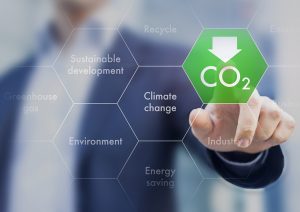
Carbon tax is similar to income tax — it’s even administered and collected by SARS. Businesses pay a tax on the CO2 equivalent of greenhouse gas emissions [more on CO2 equivalents here] above a certain threshold. Thresholds differ for different activities.
We are still in phase 1 of implementation, which exempts agriculture. Phase 2 is scheduled to kick in next year. Although agriculture is expected to remain exempt, the tax will indirectly affect growers by increasing fuel and energy costs. In addition, there is no reason to expect agriculture to enjoy exemption indefinitely.
The Climate Change Act came into force in March 2025, but there is still much to be done before it is fully implemented. Setting and regulating sectoral emissions targets, as well as emissions reporting, are key aspects of the Act.
Sectoral targets are still under development, but with agriculture responsible for roughly 11% of South Africa’s emissions, there is little doubt that reductions loom for the sector.
Beyond our borders
For the South African pome- and stone-fruit industry, the greatest pressure to measure and manage emissions still comes from our markets. Retailers and consumers, especially in the United Kingdom and Europe, increasingly demand ethically and sustainably produced fruit and want to know the carbon footprint of products.
However, two different sets of European regulations may also affect the deciduous-fruit industry in the near future.
The first is the Carbon Border Adjustment Mechanism (CBAM). The basic idea of CBAM is to create a level playing field for domestic and imported products, as European industries are subject to emissions taxes and fines that potentially put them at a disadvantage.
As a result, some European industries could relocate to countries without emissions taxes and fines, thereby reducing European economic activity while defeating the object of mitigating climate change.
CBAM has been rolling out since 2023, initially covering only cement, iron, steel, aluminium, fertiliser, and electricity. Agricultural imports are currently exempt, but there are calls to include them by 2030. Non-European countries, including the United Kingdom and Canada, are also developing CBAM regulations.
Uncertainties abound about the direct cost implications of CBAM. However, one thing is sure: CBAM is yet another reason why growers and pack houses must track and document their carbon emissions.
The European Union is also working toward the introduction of Product Environmental Footprint labels. These would be analogous to the nutritional labels we’re accustomed to seeing on food, but instead of listing calories and ingredients, the Product Environmental Footprint labels would list environmental impacts.
Examples of impacts considered for the labels include climate change, ozone depletion, human toxicity, environmental pollution, and water use. To obtain this information for any given product requires a life cycle assessment — more on that below.
Two ways to measure
Given the many reasons for tracking emissions, the obvious question is, how? There are two main approaches to carbon footprinting: corporate and product.
Corporate carbon footprinting focuses on the emissions of a business, such as a farm or a pack house, over a set period, usually a year.
It typically accounts for the business’ direct emissions (for example, fuel use by tractors or forklifts), indirect emissions from electricity, and indirect emissions in the value chain (for example, associated with the production of fertilisers or packaging).
Reporting for regulatory purposes, such as carbon taxation or sectoral emissions, tends to use corporate carbon footprinting. Corporate-level footprinting also informs the setting and tracking of science-based targets and provides information for ESG (Environmental, Social, and Governance) disclosures.
Product carbon footprinting drills down on the emissions associated with a unit of product, for example, a kilogram of apples or plums. It’s based on a life cycle assessment, which encompasses every emission associated with the product.
A life cycle assessment for fruit would include emissions from orchard establishment and management, postharvest handling and storage, and logistics, shipping, and retail. For example, if apples are packed in cartons on wooden pallets, the associated emissions from forestry and paper mills are part of the life cycle assessment.
As mentioned above, life cycle assessments aren’t limited to carbon emissions, but also encompass environmental impacts such as water use or biodiversity loss. While product carbon footprinting will be needed to navigate the CBAM, life cycle analysis will be needed for populating Product Environmental Footprint labels.
Besides measuring corporate and product footprints to satisfy regulators and markets, knowing these figures is critical for any business seeking to optimise its practices, reduce waste, beef up the bottom line, and protect the world in which it operates.
In the past, businesses could get by with financial bookkeeping because resources such as coal and water were cheap, and the true cost of carbon emissions was seldom borne by those emitting them. But if businesses plan to be around in the future, they’ll have to get their carbon books in order.
Further resources
The South African fruit and wine industries joined forces to establish the Confronting Climate Change initiative in 2008. With financial support from the Department for International Development in the United Kingdom, the Post-Harvest Innovation Fund, the National Agricultural Marketing Council, and the Western Cape Department of Agriculture, a carbon calculator tool was developed and implemented by sustainability consultancy Blue North.
Watch the recent Hortgro Footprint Webinar on Sustainable Agriculture and Carbon Footprinting on the Hortgro YouTube Channel.
Panellists included Anél Blignaut from Blue North, Mathew Guest from SIZA, and Zelde Kennedy from Fruitways Marketing. The discussion was led by Nitasha Baijnath-Pillay, Hortgro Resource Management and Sustainability Manager.
Related Posts:
The widening circle How a shrinking world is driving evolution in the regulatory environment. By Anna Mouton. The South African fruit industry has…
Find a sustainability North Star Humankind is pushing earth systems and natural resources to their limits. Business strategies must meaningfully, positively, decisively, and transformatively deliver…
Case study: effective plant improvement The Netherlands is a small country that packs a powerful horticultural punch —can the South African pome- and stone-fruit industries…
Confronting climate change Carbon emissions and the future of South African agriculture. By Anna Mouton. Global warming threatens South African agriculture as much…
Data-driven sustainability New research projects aim to quantify some of the positive and negative effects of the deciduous-fruit value chain. By Anna…