Ethyl formate shows promise as a postharvest treatment for mealy bugs on pome fruit. By Anna Mouton.
Mealy bugs are considered phytosanitary pests by some markets and aesthetically unacceptable by nearly all consumers. But a shrinking arsenal of preharvest pesticides makes it increasingly difficult to guarantee that no mealy bugs reach the pack house. How can we ensure they don’t sneak into cartons?
A Hortgro-funded project led by Dr Minette Karsten, Crop Protection Programme Manager at Hortgro Science, investigated ethyl formate for postharvest mealy bug control. Liana de Araujo is the doctoral student on the project. Their experiments were conducted at PHYLA, the pome- and stone-industry phytosanitary research facility.
Why ethyl formate?
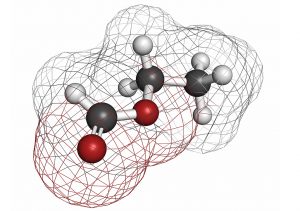
Ethyl formate seems an unlikely postharvest fumigant. It is a naturally occurring organic compound that smells of rum and tastes of raspberries. Ethyl formate contributes to the flavour of many foods and is generally recognised as safe when used as a food additive.
Researchers discovered the insecticidal properties of ethyl formate while searching for an alternative to a standard fumigant that had been banned. This is not a reference to methyl bromide. The year was 1925, and the fumigant in question was carbon disulphide.
Carbon disulphide was the go-to product for controlling weevils in grain, but its flammable and explosive properties led the railways to prohibit its use for fumigating boxcars.
Subsequently, Ira Neifert and colleagues from the USDA tested more than 100 organic compounds and found that esters (the chemical class that includes formates) were the most toxic to weevils. Despite its efficacy, ethyl formate never really caught on as it was relatively expensive and highly flammable.
Once the insecticidal properties of methyl bromide were identified in 1932, it rapidly became the fumigant of choice for most commodities, until ozone depletion surfaced as a global concern in the 1980s.
Methyl bromide breaks down to release ozone-destroying bromine radicals, so it must be phased out under the 1987 Montreal Protocol on Ozone Depleting Substances, and its use has already been banned in several countries.
In contrast, ethyl formate and its breakdown products (ethanol and formic acid) don’t affect the ozone layer. Ethyl formate also doesn’t affect the quality or taste of treated products. It leaves no harmful residues and is not subject to a withdrawal period after use.
The fumigation-cold combo
For her trials, De Araujo focused on the obscure mealy bug (Pseudococcus viburni) as it is such a common species in South African pome-fruit orchards.
She exposed mealy bug egg sacs to different concentrations of ethyl formate. The egg sacs originated from a laboratory colony of mealy bugs, which De Araujo maintained on butternuts.
“Research has shown that the eggs are more tolerant than the crawlers and adults to fumigation,” she says. “So, I placed the egg sacs on a sticky liner in a petri dish, and if crawlers hatched, they got stuck, and I could count them as well as the unhatched eggs.”
She exposed the egg sacs to either 40, 50, 60, or 70 grams per m3 of ethyl formate for four hours at room temperature. The treated egg sacs were then stored at either 1.1 °C or 25 °C for two weeks to assess mortality relative to untreated controls.
Although ethyl formate produced 100% mortality in at least some egg sacs across all fumigation treatments, storage temperatures significantly influenced the results. Adding the 1.1 °C treatments produced more consistent data with fewer outliers, according to De Araujo.
Whereas the percentage mortality varied widely in fumigated egg sacs stored at ambient temperatures, most fumigated egg sacs stored at 1.1 °C showed near-total mortality, and none had more than 50% survival. Almost no eggs survived when treated with 60 or 70 grams per m3 ethyl formate and stored at 1.1 °C.
“My conclusion is that ethyl formate combined with cold storage is very effective at achieving mealy bug mortality,” summarises De Araujo.
Interestingly, cold storage caused significant egg mortality even without fumigation. However, it is not a standalone control option, and De Araujo cautions that mealy bugs are tougher than they look.
“I’ve even put mealy bugs in the fridge for up to two days, hoping that I could get photos of them under the microscope before they wake up,” she says. “But they wake up quite quickly. Some of them start moving their legs almost immediately.”
New life for an old fumigant?
It’s been known since 1933 that the flammability of ethyl formate can be reduced by mixing it with carbon dioxide. As a bonus, carbon dioxide stimulates the dilation of insects’ respiratory openings, thereby increasing their uptake of airborne pesticides.
Nowadays, systems can deliver the correct ratio of ethyl formate and carbon dioxide, so safety should no longer pose the same barrier to adopting ethyl formate fumigation as it may have done a century ago.
With the demise of methyl bromide, ethyl formate is poised to enter the mainstream, and Hortgro has already funded extensive research on its use to control potential phytosanitary pests.
For example, Dr Shelley Johnson, phytosanitary entomologist and market-access specialist at Hortgro, and Dr Renate Smit, manager of PHYLA, have demonstrated the efficacy of ethyl formate against grain chinch bugs (Macchiademus diplopterus). Read more about their work in Fresh Quarterly issue 5 and issue 10.
They are also collaborating with experts in the Department of Chemistry and Polymer Science at Stellenbosch University to develop packaging that emits ethyl formate, similar to the sulphur dioxide-releasing sheets employed for decay control in table grapes. Read more about this project in Fresh Quarterly issue 17.
De Araujo and Karsten’s results add to this growing body of work supporting the adoption of ethyl formate as a postharvest fumigant. Although further research is needed to fine-tune application protocols and generate efficacy data, ethyl formate appears to be a viable alternative to methyl bromide.
Related Posts:
Integrated mealy bug management Growers must adopt a strategic approach to overcome this ancient pest. By Anna Mouton. Mealy bugs co-evolved with vascular plants…
Stopping grain chinch bugs Grain chinch bugs — Macchiademus diplopterus — are indigenous to the wheat-growing areas of the Western Cape. They are pests…
Exterminate grain chinch-bugs Trials using ethyl formate yield promising results. By Anna Mouton. "Phytosanitary issues are among the many challenges we face in…
Fumigation to combat phytosanitary pests Basics, benefits, and the rise of ethyl formate. By Grethe Bestbier. Worldwide, fumigation is recognized as an effective way of…
Sustainability in the Crop Protection Programme The newly formed Precision Crop Protection Workgroup provides a platform to focus on sustainable crop-protection practices. By Jenny Underhill. “I…
The six-legged hitchhiker The tiny grain pest catching a ride on our fruit. By Grethe Bestbier. The grain chinch-bug — Macchiademus diplopterus —…