Growers can’t eradicate thrips, but the right interventions at the right time can reduce the risk of fruit damage. By Ilyaas Rhoda.
Western flower thrips (Frankliniella occidentalis) were first detected in South Africa during the late 1980s after spreading from California. About two millimetres long, these tiny insects have an outsized impact on pome- and stone-fruit production.
“What started in rose houses in Gauteng soon spread to fruit orchards across the country,” explains entomologist Dr Elleunorah Allsopp. By the mid-1990s, Western flower thrips had become the dominant thrips species in many apple and plum orchards.
Recently retired from the Agricultural Research Council, Allsopp has researched thrips in deciduous and other fruit for decades. Based on her experience, Western flower thrips are here to stay. The polyphagous insects are part of the ecosystem, moving freely between crops, weeds, and indigenous plants.
“The aim is not eradication but adopting a mindset of coexistence through careful management,” says Allsopp. “Thrips management is a long-term process of understanding when and where the pest poses the greatest risk and intervening only when necessary to protect the vulnerable stages of the crop.”
Understanding thrips biology
Thrips females can reproduce without males by laying unfertilised eggs that become males, and mating with these males, producing fertilised eggs that become females.
“Female thrips insert eggs just beneath the surface of plant tissue, inside developing blossoms, leaving small corky spots surrounded by pale tissue, known as pansy spots,” explains Allsopp. “These marks are superficial, leading to cosmetic downgrades and export rejections in markets with strict visual standards.”
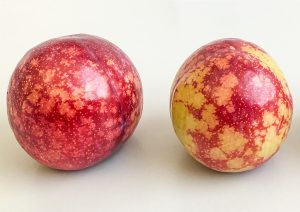
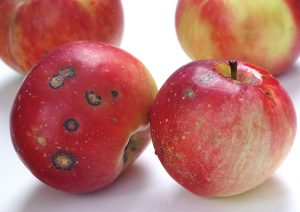
Larvae hatch after 2–5 days. They feed by puncturing young plant cells and sucking out their contents, disrupting fruit development. Feeding during the early cell-division stage can cause fruit to become misshapen or dimpled, while feeding during the cell-enlargement stage produces brown, corky scars that resemble wind damage.
“Later in the season, thrips feeding on ripening fruit creates the characteristic silvering effect as pigment is lost from surface cells,” says Allsopp. “Feeding on tender shoots and leaves causes curling and browning, which reduces photosynthesis and weakens the yield potential for the next season.”
After feeding, the larvae retreat into crevices on the host plant or hide in leaf litter or just below the soil surface to pupate before emerging as winged adults.
“Under warm conditions, this entire cycle from egg to adult can take 2 to 3 weeks,” says Allsopp. “This short life cycle, combined with their ability to reproduce without males, allows thrips populations to explode almost overnight.”
Monitoring for timely intervention
Managing Western flower thrips requires keen observation, timely intervention, and a long-term strategy for population suppression and damage prevention. Success depends on recognising and acting when the crop is most vulnerable.
“For every thrips detected, many others remain unseen, and by the time visible damage appears, the infestation has already progressed,” says Allsopp. “Added to this is the presence of multiple thrips species, including indigenous citrus thrips (Scirtothrips aurantii) and onion thrips (Thrips tabaci), making it nearly impossible to identify the exact culprit without microscopic examination.”
This complexity frustrates many growers who rely on visual monitoring. However, spraying too early or too late can miss the pests entirely while harming beneficial insects like pollinators.
“Once thrips are established, elimination is virtually impossible,” says Allsopp. “Farmers should prioritise developing an understanding of how these pests live and behave to minimise their impact.”
Monitoring begins as early as the bud swell stage, just before flowering, using sticky traps. Blue or yellow sticky cards hung outside the tree canopy, in full sunlight, are most effective for detecting thrips.
“These traps should be checked regularly, and suspicious specimens sent for microscopic identification to distinguish pest species,” says Allsopp. “Some growers use gentle tapping of blossoms into sampling bags, though these methods often capture immature thrips that cannot easily be identified.”
Finding strategies for control
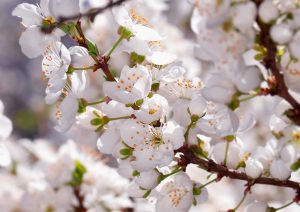
When traps indicate high thrips activity before flowering, growers should apply a preventive insecticide during the balloon stage, while petals are still closed. This reduces egg-laying before pollinators become active.
Insecticides targeting thrips are mostly contact-based rather than systemic, so timing is crucial. Sprays applied after flowers open are less effective in preventing pansy spot damage and can harm pollinators.
Flowering cover crops or weeds should not be disturbed shortly before and during flowering and fruit set because this can trigger mass thrips migration into fruit flowers.
“Later in the season, if monitoring traps reveal high thrips populations, especially as harvest approaches, growers may need to apply another spray,” advises Allsopp. “This helps prevent cosmetic damage, such as silvering or scarring on fruit.”
Researchers are investigating biological alternatives to complement conventional chemical control. Indigenous entomopathogenic fungi and nematodes have demonstrated the potential to infect and kill thrips under controlled conditions. The proof-of-concept work is complete, but field trials are still required, as laboratory success does not always translate to open-field conditions.
A new Hortgro-funded research project is also underway to assess the impact of cover crops and nets on thrips populations in stone- and pome-fruit orchards.
“The study will examine orchards under different management practices, from conventional mowing and herbicide use to biologically focused systems with cover crops that improve soil health and foster beneficial insect diversity,” says Dr Nanike Esterhuizen, Hortgro Science Entomology Research Technician, based in the Department of Conservation Ecology and Entomology at Stellenbosch University.
“It will also compare orchards with and without nets to understand how microclimate changes influence thrips populations,” she adds.
The study seeks to help growers cultivate healthy, balanced orchards while keeping pest populations under control. By examining the thrips species present under different management strategies, it aims to provide valuable insights to support effective integrated pest management.
Related Posts:
Plum marbling What is it and what can be done about it? By Anna Mouton. What is plum marbling? Plum marbling is…
The unstoppable brown marmorated stink bug How is the Netherlands responding to the threat of this globally invasive pest? By Anna Mouton. Entomologist Dr Karin Winkler…
Debugging pome fruit What have we learnt about sap-sucking insects in apple and pear orchards? By Anna Mouton. The order Hemiptera contains more…
Getting to grips with plum marbling The science behind the control strategy. By Anna Mouton. Figuring out plum marbling is like building a jigsaw. The discovery…
Fifty years of apple-scab research A summary of historical South African research on apple scab starting in 1970 with the work of Dr Wolf Schwabe.…
The fundamentals of fruit set What does it take to get from blossom to bin? By Anna Mouton. Technical input by Prof. Karen Theron, Chair…