Scientists explain how they develop crop-protection products that work by communicating with pests. By Anna Mouton.
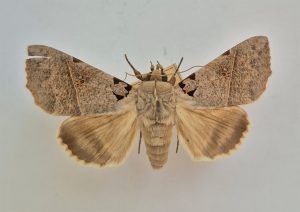
The French father of entomology, Jean-Henri Fabre, was the first person to reveal the chemical language of insects when he demonstrated that male moths find females by scent. Fabre’s discovery in the 1870s generated a novel opportunity: could humans learn the insects’ lingo? And even talk back?
Fast-forward 150 years, and this is precisely what Dr Vernon Steyn, Managing Director at Insect Science, and his team do every day. Steyn and Hanna-Let van der Lith, Head of Regulatory and Research at Insect Science, spoke to Fresh Quarterly about the process of uncovering and exploiting insect communication.
Unlocking pheromone power
Although Fabre’s experiments pointed to the existence of pheromones, the German biochemist Adolf Butenandt only isolated the first insect pheromone in 1959. Butenandt had already been awarded the Nobel Prize in Chemistry in 1939 for his work on human sex hormones.
It took Butenandt nearly 20 years and more than half a million silkworm moths to purify a few milligrams of what he later called bombykol. He and his team painstakingly analysed and characterised this compound, and then synthesised it, proving that the laboratory-made pheromone elicited mate-seeking behaviour in male moths.
The ability to synthesise insect pheromones laid the foundation for a global semiochemical market that was valued at USD 4.7 billion in 2022. About 70% of this market is based on sex pheromones, and about a quarter on aggregation pheromones. Semiochemical-based crop-protection solutions are likely to become even more widely adopted as pressure on conventional chemical insecticides increases.
“Our focus has shifted to sucking insects, such as thrips and mealy bugs,” says Steyn. “We need to be able to control those pests when systemic insecticides are no longer available.”
Fortunately, advances in analytical chemistry enable scientists to discover pheromones without dissecting hundreds of thousands of insects. With highly sensitive gas chromatography-mass spectrometry, tiny samples are sufficient for identifying all the compounds present in an insect’s glands.
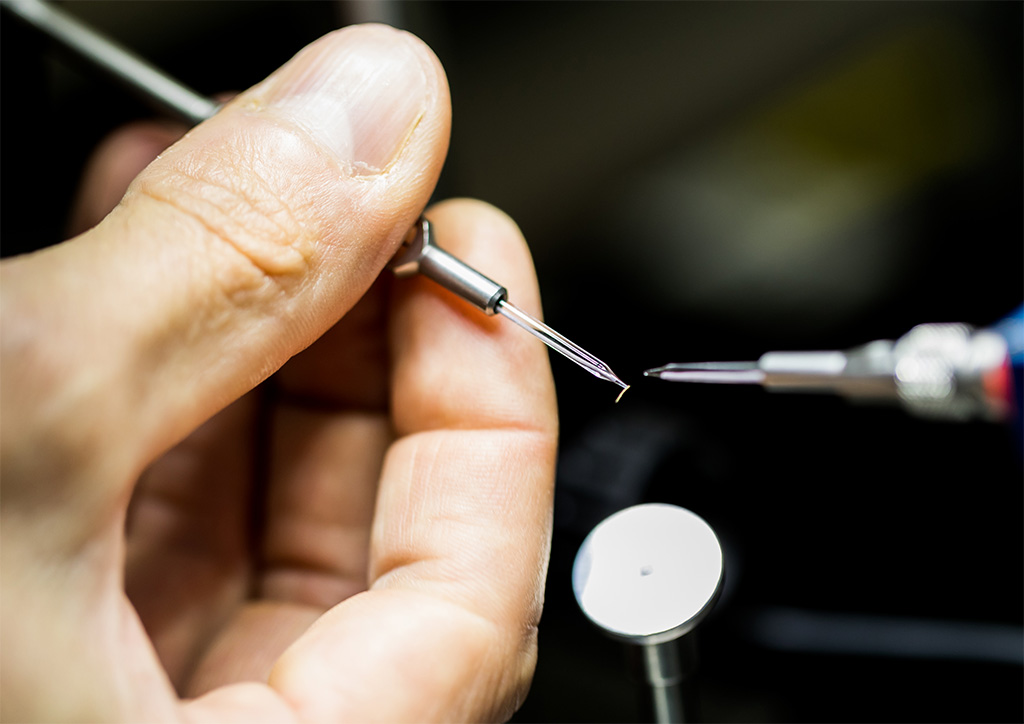
When studying larger insects, such as moths, researchers can follow a different approach. They place the insects in special chambers to collect any volatiles the insects release. Next, they separate the volatile mix into fractions. Using electroantennography, they can then test which fractions contain pheromones.
Electroantennography measures the response of an insect antenna to a volatile compound. For example, male moths detect female pheromones with their antennae, so their antennae respond strongly to female pheromones on an electroantennogram.
The development process
New semiochemical-based crop-protection solutions originate from real-world problems growers face. “We have technical people in the field who identify the key issues in various crops,” says Van der Lith. “If there’s an emergency in a specific crop, they’ll flag it, and we’ll prioritise working on it immediately.”
Additionally, Steyn is a Research Fellow with the Department of Conservation Ecology and Entomology at Stellenbosch University, where he did his doctoral studies on false codling moths (read more about this Hortgro-funded research in Fresh Quarterly issue 7). Close collaboration with the University also stimulates the development of new products.
From problem to product can take up to a decade. “The fastest product we ever brought to market was the lure for spotted wing drosophila,” recalls Steyn. “That was a best-case scenario where there was good existing literature, strong industry support, and emergency product registration.”
Usually, emergency registration is not available. In those cases, even if the existing literature facilitates rapid product development, it will take about six years before it reaches growers, due to the time required for field trials and the registration process.
“Sometimes there isn’t much literature, and we don’t know what the pheromone is. We may not even have a species name — we only know the insect is a pest,” says Steyn. “Then we have to start from scratch, and it can take up to ten years until we have a registered product.”
The Insect Science researchers start by learning all they can about the pest. “We want to know everything about its anatomy and physiology, its entire biology, so we can understand how to control it in the crop where it occurs,” says Van der Lith.
“If there are no known pheromones, Dr Marc Bouwer, our analytical chemist, either performs electroantennography or analyses extracts of the insect to identify compounds to which it reacts,” she continues. “Once we identify a compound, our synthetic chemist, Dr Divan van Greunen, figures out how to make it.”
In the real world
Occasionally, a pheromone or its chemical precursors may already be commercially available, but Van Greunen usually has to devise a synthetic pathway to produce it. “Luckily, Divan thrives on organic chemistry,” comments Van der Lith.
Field trials commence as soon as Van Greunen can provide material. “We use electroantennography to verify that the compound reacts with the insect, but we don’t do other laboratory tests,” says Steyn. “Field tests are our gold standard. We want to see that the compound works in the real world.”
The Insect Science proof-of-concept team is responsible for teasing out all the variables that affect product performance, including trap design, density, and spacing. They work closely with the technical advisers to ensure the product is not only effective but also practical and affordable.
In South Africa, semiochemical-based crop-protection products must be registered under Act 36 of 1947, which regulates fertilisers, farm feeds, agricultural and stock remedies. The same rules apply as for conventional chemicals: companies must conduct registration trials to provide evidence backing any claims about product performance.
“Recently, Good Experimental Practice became an official requirement for field trials, ensuring that all registration trials are done to the same standards,” says Van der Lith. “This is very positive for South Africa.”
As pressure on conventional chemicals increases, pheromones and other semiochemicals will play an ever more critical role in crop protection. But Steyn argues that other factors are also driving the adoption of semiochemicals.
“I’ve never spoken with a grower who wants to spray pesticides. They spray because it’s their only option,” he says. “With pheromones, you have a species-specific solution to address your problems without harming anything else.”
Related Posts:
Fruit-feeding moths Know the difference between fruit-piercing and fruit-sucking moths and how to protect your fruit against them. By Anna Mouton. Mention…
False codling moth What growers need to know about control. By Anna Mouton. False codling moth is — you guessed it — a…
Can shade nets reduce water use? Research shows that netted apple orchards need less water – but growers should read the fine print. By Anna Mouton.…
Farming’s most difficult season This is arguably one of deciduous-fruit farming’s most difficult seasons. By Hugh Campbell. Exports on almost all crops are down,…
International research summarised Spotted wing drosophila invaded Europe and North America more than 15 years ago. What have researchers since learned? By Anna…
Hot topics in crop protection From regulations and research to integrated and regenerative practices. By Anna Mouton. “How will the deciduous-fruit industry transition to more…