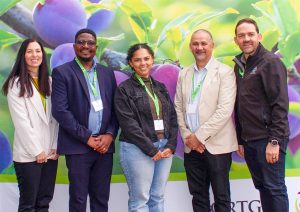
Advances in virus detection are reshaping how the industry understands the hidden role of viruses in orchards. By Ilyaas Rhoda.
When growers think about the threats to orchard performance, viruses are seldom at the top of the list. However, advances in plant virology are revealing that viruses may be more common in orchards than previously thought, said plant virologist Prof. Gerhard Pietersen, research director at Patho Solutions.
During the 2026 Hortgro Technical Symposium, his presentation outlined how virus identification and detection methods have evolved over several decades and explained how high-throughput sequencing (HTS) is transforming the industry’s understanding of plant viruses.
In the past, virus identification and the development of a detection method would typically take months or years. Today, advances in sequencing technology have reduced that timeframe to weeks or even days, allowing scientists to identify more viruses than ever before in horticultural crops, including pome and stone fruit. However, interpreting the results has become more challenging.
Part of that challenge lies in the nature of viruses themselves. Despite being remarkably simple organisms, consisting of a piece of nucleic acid enclosed within a protein coat, they can interact with host plants in complex ways and may affect fruit quality, yield, or tree longevity.
Evolution of virus detection
For decades, virus detection relied largely on observing symptoms in infected plants. “Back in the 1960s and before, viruses were identified by the effects they had on the host plants they infected,” explained Pietersen. “Researchers would take samples from plants suspected of harbouring viruses and inoculate indicator hosts known to react to specific infections.”
The development of characteristic symptoms helped scientists identify viruses. While effective for many viruses, these methods had significant limitations. Viruses that caused mild or no visible symptoms often went undetected. Advances in technology have gradually improved scientists’ ability to detect viruses.
“Electron microscopy in the 1970s and 1980s allowed researchers to observe virus particles directly, while the introduction of the enzyme-linked immunosorbent assay [ELISA] provided an inexpensive method for large-scale screening,” said Pietersen. “However, ELISA could still miss viruses present at very low levels.”
A breakthrough came in the 1990s with the introduction of molecular techniques such as the polymerase chain reaction (PCR). “By targeting viruses’ genetic material, PCR offered far greater sensitivity, and enabled researchers to detect specific viruses and strains with much greater accuracy,” said Pietersen. “Despite these advances, traditional diagnostic methods shared a common limitation — researchers had to know which virus they were searching for before they could test for it.”
New sequence technology
The emergence of HTS, also known as next-generation sequencing, has revolutionised plant-virus diagnostics. “Unlike traditional testing methods, which require researchers to know which virus they are searching for, HTS can detect virtually any virus present in a sample,” explained Pietersen. “The technology works by sequencing all genetic material extracted from a sample, including material from the host plant, viruses, fungi, bacteria, and insects.”
The technology has transformed plant virology by providing an unprecedented view of the viral communities present in horticultural crops. According to Pietersen, analysing a single sample and generating up to 125 million sequence reads allows researchers to compare these reads with global databases to identify the viruses present. Beyond identifying known viruses, HTS can identify new strains of existing viruses and discover entirely new viruses.
While HTS has transformed virus identification and detection, it has also created new challenges. “The challenge scientists face is that HTS is finding plenty of viruses,” said Pietersen. “For most of them, their true significance remains unknown.”
Hidden complexities in orchard performance
The relationship between viruses and plant performance is more complex than it seems. Older trees commonly carry multiple viruses, some of which cause visible symptoms and others which remain dormant. Some combinations cause more severe disease than any of the component viruses alone.
Environmental conditions further influence what growers see, as symptoms may result from interactions among multiple viruses or from stressors such as climate or root health. Historically, viruses were often linked to specific symptoms, though a single virus did not always cause them.
Researchers need pure virus isolates to clearly understand their individual effects, followed by long-term trials to measure impacts on fruit quality, tree vigour, and profitability. The mixed infections that often occur in practice make it difficult to separate the effects of one virus from another. As a result, many viruses identified through sequencing remain poorly understood.
“Virus elimination, which is a broad treatment to remove multiple viruses, is a more practical management approach,” stated Pietersen. “Attempting to determine the economic impact of every virus and the numerous virus combinations affecting commonly planted cultivars is less feasible.”
Clean plant material remains key
Growers are urged not to overreact when sequencing results reveal multiple viruses in their trees. Sequencing results should be interpreted carefully, within the broader context of orchard performance, visible symptoms, and expert advice.
“The presence of a virus does not necessarily justify drastic management decisions such as orchard removal or costly interventions,” explained Pietersen. “Many detected viruses may have been present for years without causing measurable damage, making overreaction a greater risk than the viruses themselves.”
Currently, the fruit industry is integrating next-generation sequencing into certification systems to strengthen phytosanitary standards. The aim is to give growers greater confidence in the virus status of their trees before orchards are established.
“Nuclear material used in certification schemes is increasingly being tested with advanced sequencing technologies, while virus elimination methods continue to be developed,” said Pietersen. “Industry organisations, nurseries, and research institutions are investing in expertise to ensure that future planting material achieves the highest possible phytosanitary status.”
Pietersen encouraged growers to use certified trees whenever possible. “The industry’s most effective defence remains unchanged,” he said. “Starting with clean, certified plant material remains the most reliable approach to reducing virus risk in orchards.”
Keep your trees virus-free Virus infections often fly under the radar while growers look elsewhere to explain underperforming orchards. By Anna Mouton. “All the…
The enigma of pear stony pit What causes pitted pears in South African orchards? Apple stem pitting virus or antestia stink bug? By Anna Mouton. Pear…
Figuring out the cause of pitted pears Stink bugs or stem-pitting virus? By Anna Mouton. A new research project funded by Hortgro aims to establish the cause…
Fit for purpose South African apple growers are leveraging rootstock diversity to adapt and thrive in an increasingly complex industry. By Anna Mouton.…
Regulation of phytosanitary risk in South Africa Quarantine, diagnostics, and laboratory networks support biosecurity within a global context of constrained resources. By Jenny Underhill. “Emerging or invasive…
Integrated mealy bug management Growers must adopt a strategic approach to overcome this ancient pest. By Anna Mouton. Mealy bugs co-evolved with vascular plants…