Supporting communities involved in land claims plays a major part in their success. By Engela Duvenage.
On 25 October 2024, the Rakwadu community received title deeds for two farms totalling 1 123 hectares near Tzaneen, following a successful land claim process started in 1998.
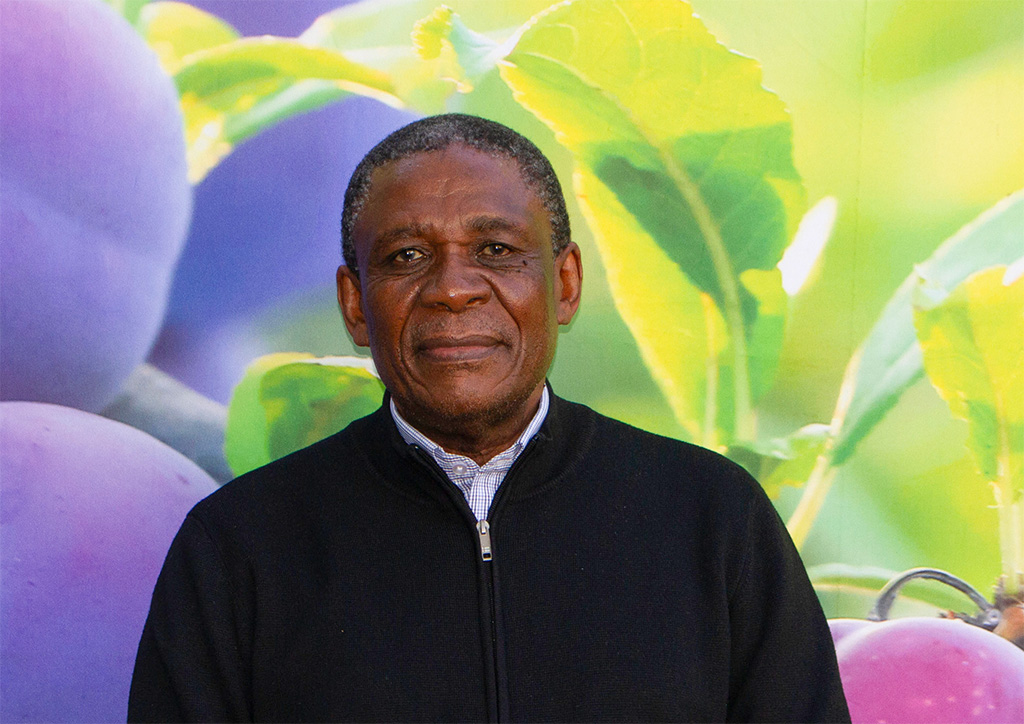
“It was one of the happiest days,” recalled Dr Khotso Mokhele, chairman of the Hans Merensky Legacy Foundation, Hans Merensky Holdings, and Westfalia Fruit International, in addressing the Hortgro Technical Symposium.
Deelkraal and Goedgelegen
The land claim involved the farm Deelkraal, which is near Westfalia, the estate from which Hans Merensky Holdings and Westfalia Fruit International Enterprises were born following geologist Hans Merensky’s pioneering focus in the 1930s on sustainable and scientific farming.
In the 1960s, some 172 households were removed from Deelkraal. In the 1990s, Hans Merensky Holdings adopted a policy of cooperation with the South African government on legitimate land claims to ensure that communities regain ownership and derive economic value.
An assessment revealed that Deelkraal had relatively few orchards, limited access to water, and was unlikely to provide a sustainable livelihood or a strong economic foundation for beneficiaries.
However, the neighbouring Goedgelegen was another matter. Mokhele described Goedgelegen as a jewel in the company’s crown. It had economic potential, with GEM avocados grown as an alternative to the globally dominant hard-skinned Hass cultivar.
Goedgelegen was therefore also offered for sale to the government as part of the restitution process, despite it not being included in the Rakwadu community’s claim.
Today, the two pieces of land are farmed together in a partnership between Westfalia Fruit and Rakwadu Enterprise, the entity representing the Rakwadu Communal Property Association (CPA). Westfalia holds the majority share. The arrangement combines community ownership with commercial expertise, helping to ensure the continued productivity and economic success of the farms.
Connecting communities to the value chain
The initiative has already expanded beyond avocado production. The Rakwadu Coriander Project provides 10 tonnes of GlobalG.A.P.-certified coriander annually to Westfalia’s nearby Politsi factory for use in guacamole production, creating further employment opportunities.
“It is about connecting communities directly into the value chain,” said Mokhele. “What began as a land claim has become the foundation for a long-term partnership model built on dignity, sustainability, shared growth, community ownership, strategic oversight, and inclusive leadership.”
He described it as a story of hope, reconciliation and going the extra mile. It places the land involved in the spotlight by ensuring that it is farmed sustainably and viably, and food production targets are met.
To Mokhele, sustainability is a core principle in successful land restitution projects. “We are working with the community to help them keep things together, so that they get proper economic value from their successful land claim. We will not leave them unto themselves,” he promised.
He referred to recent research by the University of Venda, in the International Review of Social Sciences Research, that unpacks major challenges of South Africa’s land restitution process. These include weak institutional capacity, governance difficulties within CPAs, challenges associated with the willing-buyer-willing-seller model, and limited community participation.
Mokhele said strife within CPAs too often is debilitating. He cautioned against the assumption that communities displaced decades ago, with families scattered across the country, will automatically function cohesively following successful land claims. Rebuilding weakened social and community ties often requires active support and facilitation.
“We all know the minute the money starts to flow, the 4×4-driving descendants from such communities descend from Sandton and Camps Bay to claim a piece of the pie,” he said. “Then, when the fights begin, communities are all too often left unto themselves to resolve matters.”
Strong ties lead to success
According to Mokhele, the Rakwadu project’s success is partly due to the community involved keeping reasonably strong ties over six decades. He contrasted its progress with that of a land claim involving the historic Lutheran Botshabelo Mission Station and the adjacent Fort Merensky near Middelburg.
The station was established in the 1860s by Merensky’s missionary father, Alexander, but in the apartheid years, families were forced to move far away. There was great optimism when the Botshabelo Community Trust, established in 2004, successfully received a foundational development grant from the National Lottery.
The Hans Merensky Legacy Foundation and the Ecumenical Lutheran Church of Southern Africa pledged support to help realise economic and social gains. Sadly, there is community strife and contestations. Efforts are underway to assist the community in finalising a register of beneficiaries, 22 years after their successful claim was gazetted.
“As a Foundation, we stand ready to help the community translate land into economic value,” said Mokhele. “But we cannot do it without legally legitimate interlocutors on the other side.”
He challenged South Africa’s fruit sector to go above and beyond to see land restitution projects succeed. “We need collective ways to resolve such issues,” he said. “As a nation, communities, farmers, and government, we have it in us to find solutions.”
For Mokhele, sustainability and giving back are the founding principles of the entities he chairs and builds on the legacy of Hans Merensky. As a geologist, Merensky discovered South Africa’s platinum riches in the Bushveld Igneous Complex, phosphate deposits near the Kruger National Park, and diamonds on the north-west coast of South Africa, which are still mined.
As a farmer, Merensky pioneered improved, sustainable farming of various fruits, including avocados, and eucalyptus forestry in the Lowveld. The Hans Merensky Legacy Foundation continues his philanthropic legacy by supporting South African educational and agricultural endeavours.
Merensky explained his motivation when a library carrying his name was opened at the University of Pretoria in the late 1930s. “This country has given me so much that I am only too happy to be allowed to help it develop in some way,” he said. “And I am grateful to be able to give back to it a fraction of what it has given me.”
Find a sustainability North Star Humankind is pushing earth systems and natural resources to their limits. Business strategies must meaningfully, positively, decisively, and transformatively deliver…
Growing the agricultural pie is key Meaningful agricultural transformation requires more than just unlocking land. By Engela Duvenage. Small-scale farms need to become commercially successful within…
Fruit industry must raise its voice The South African fruit industry needs a stronger voice to influence relevant, practical, and standardised sustainability requirements. By Engela Duvenage.…
Sustainability gets its own programme Hortgro has established the Resource Management and Sustainability Programme to help ensure the future of the deciduous-fruit industry. By Anna…
Case study: effective plant improvement The Netherlands is a small country that packs a powerful horticultural punch —can the South African pome- and stone-fruit industries…
The widening circle How a shrinking world is driving evolution in the regulatory environment. By Anna Mouton. The South African fruit industry has…