A rapidly changing world holds challenges and opportunities for the deciduous-fruit industry. By Engela Duvenage.
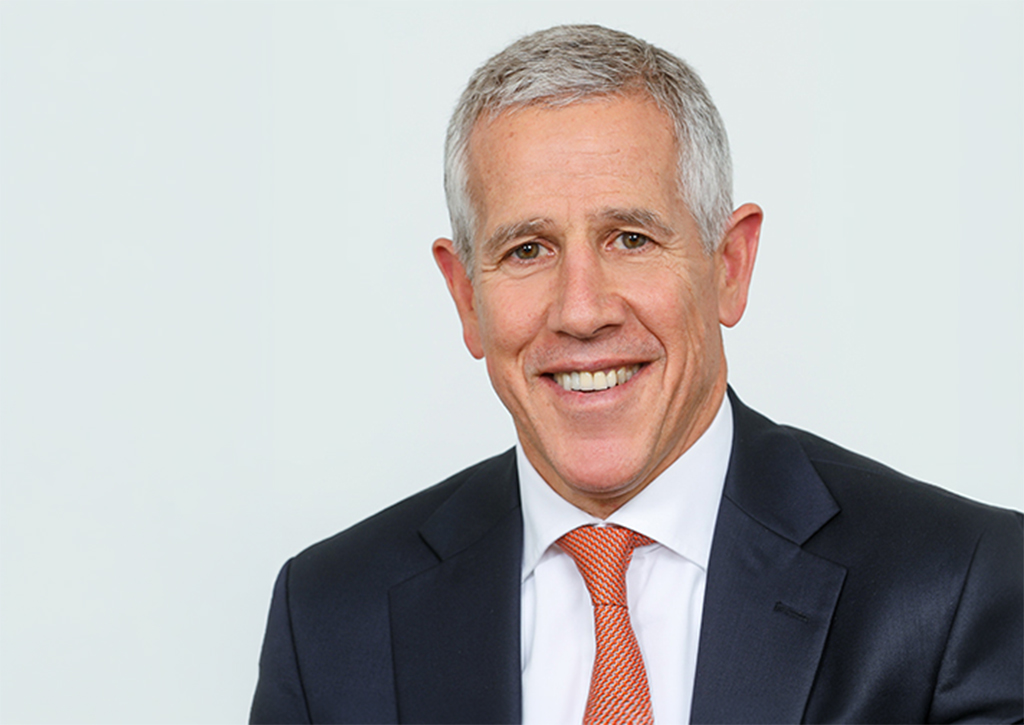
Grit, application, action, and belief amid continued political, logistical, and climatic challenges have been a powerful success formula for the deciduous-fruit industry over more than three centuries, according to Hendrik du Toit, founder and chief executive officer of investment firm Ninety One.
He believes that courage and the willingness to seize opportunities and technological advances amid an uncertain, changing world order will help the sector prosper. Speaking at the recent Hortgro Technical Symposium, he motivated attendees by quoting the late South African president Nelson Mandela, who said that courage was not the absence of fear, but the triumph over it.
A more supportive system
According to the Bureau for Economic Research (BER) at Stellenbosch University, the Zuma years cost South Africa 15%–30% of GDP, or more than R1 trillion in lost output. Du Toit called South Africa’s unemployment rate of 33% and youth unemployment of 60% a ticking time bomb.
Although the South African business environment remains challenging, Du Toit noted positive shifts, including improved macroeconomic indicators, primary budget surpluses, stabilised debt, lower inflation, and rising business confidence.
He is pleased with the commitments to a clear reform agenda and a fiscal strategy built around stabilising debt, infrastructure investment, and better spending made by the South African Minister of Finance, Enoch Godongwana, in his 2026 budget speech.
Du Toit also cites South Africa’s recent removal from the international Financial Action Task Force grey list, its first credit rating upgrade in 16 years, and the easing of borrowing costs as reasons for hope.
“The system will become more, rather than less, supportive of the deciduous-fruit industry as South Africa moves from a single-party era to a coalition government,” he said.
“With the right policy choices, there is no reason why South Africa cannot achieve the BER’s targets of 3% growth, 3% inflation, and a 3% budget deficit within three years, as the first steps towards a faster long-term trajectory,” Du Toit enthused.
“Business must sustain the pressure for reform and make investment commitments that demonstrate confidence.”
With South African companies holding R2 trillion in cash on their balance sheets, there is more than enough domestic firepower to ignite the economy once obstacles in procurement, the criminal justice system, state-owned enterprises, and public sector reform are removed. “Governance at Eskom, under chairperson Mteto Nyati and chief executive officer Dan Marokane, shows what the right leadership can achieve,” said Du Toit. “We must apply that standard everywhere.”
He would like to see the Public Service Amendment Bill, intended to improve public service performance, stability, efficiency, and value for money, enacted, and for the illicit economy to be addressed to strengthen government coffers.
Multi-polar world opens markets
Du Toit advised those in the capital-intensive fruit sector to shore up their balance sheets, as he doesn’t foresee interest rates lowering soon amid increased inflationary pressures from the Middle East conflict.
However, he added that new markets are opening within an emerging multi-polar world order characterised by national interests rather than rules-based cooperation, shifting supply chains, redrawn trade routes, regional conflict, and alliances based on transactional approaches rather than shared values.
South Africa’s climate, diverse produce, and established export infrastructure will favour local producers who move with urgency when countries seek reliable partners in food production. Agile countries building new alliances will benefit disproportionately.
“South African fruit, grown to world standards and certified accordingly, has a privileged position in the global reshuffle,” he said.
He called Canadian Prime Minister Mark Carney’s speech at the recent World Economic Forum meeting in Davos epoch-defining. Carney described the world as one of hegemons and hyperscalers, in which middle powers such as South Africa must build coalitions to achieve collective strength. Accordingly, the country should carefully plan around its close alliance with the UK, which will host the 2027 G20 presidency.
Du Toit called for deeper cooperation and alignment between Business for South Africa and the agricultural sector. “We need to push the government collectively to open trade opportunities,” he said. “Not for individual sectors, but the whole country.”
Technology, water, and climate
Artificial intelligence and the imminent quantum revolution will strengthen the local fruit sector’s position on global league tables. Du Toit challenged the fruit sector to give its brightest young people the licence and resources to reimagine how things are done.
Surveillance and data-driven decision-making are already standard in world-class agribusiness. Still, scientific food production, agricultural research and development, precision data, robotics, and drone technology will transform input economics, yields, waste management, irrigation, fertilisation, pest management, and harvest timing.
Du Toit called on the fruit sector to be very vocal whenever policy on expanding water-hungry data centres is discussed, and for government to provide climate-adaptation infrastructure such as water storage, catchment management, drainage, and early warning systems.
Industry initiatives to produce energy, build clean value chains, and become more environmentally friendly are securing its ongoing access to valuable European Union and United Kingdom markets. Du Toit encouraged the industry to move ahead rather than wait for regulatory compulsion in embracing faster, smarter initiatives.
According to Du Toit, well-governed companies in the agricultural, energy, water, and logistics sectors with clean data and verifiable environmental credentials are attractive to patient, long-term institutional capital investors in artificial intelligence and green transitions.
“The deciduous-fruit industry should not undersell itself. Be visible, credible, and investable if you have big expansion plans,” he said.
Ultimately, Du Toit is optimistic about the future of the deciduous-fruit industry, despite the uncertainty and volatility of the world in which it operates.
“Focus brings excellence and success, no matter the pace of change,” he said. “Decide what is truly important and maintain a laser-like focus on it.”
Reform holds the key to economic growth Individuals should control communal land. By Engela Duvenage. Prof. William Gumede, an economist and political scientist at the School of…
Case study: effective plant improvement The Netherlands is a small country that packs a powerful horticultural punch —can the South African pome- and stone-fruit industries…
The Water Research Commission Ensuring that decisions about water are informed by science and technology. By Engela Duvenage. The Water Research Commission, which in…
Growing the agricultural pie is key Meaningful agricultural transformation requires more than just unlocking land. By Engela Duvenage. Small-scale farms need to become commercially successful within…
FruitFly Africa supports the fruit industry Area-wide monitoring and control are essential to prevent fruit losses and maintain sustainable production. By Ilyaas Rhoda. South Africa’s reputation…