How the European Union is attempting to achieve food security without losing sight of its sustainability goals. By Anna Mouton.
The European Union is one of the South African deciduous-fruit industry’s key export markets. Therefore, the audience at the 2026 Hortgro Technical Symposium was keenly interested in a presentation by Prof. Christine Wieck on the European Union’s evolving trade approach.
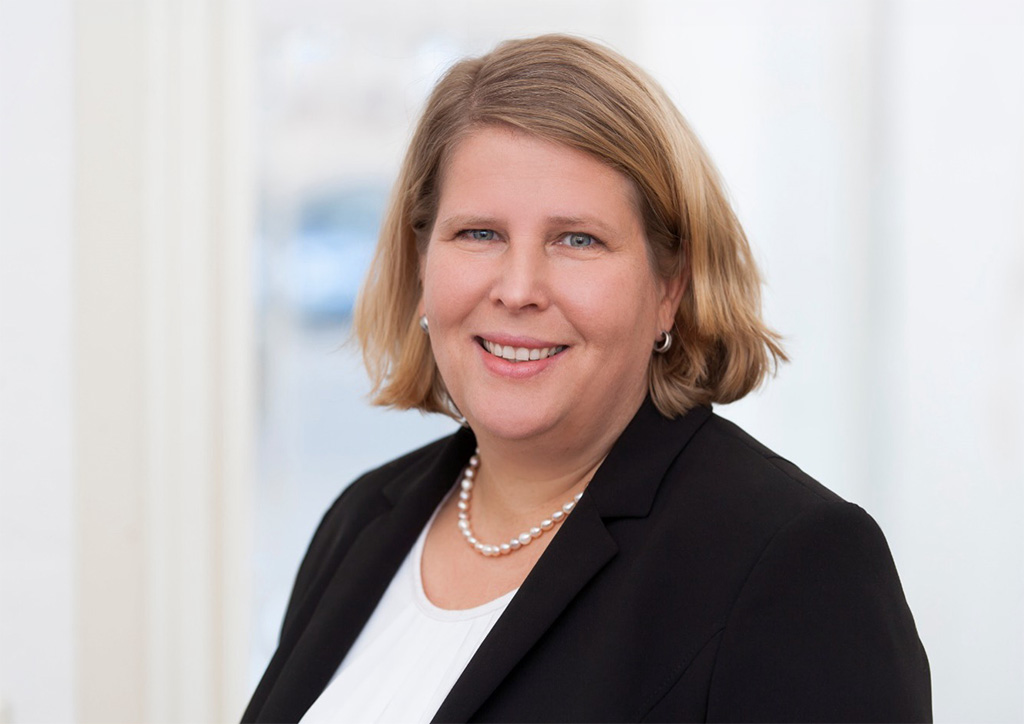
Wieck is a professor of Agricultural and Food Policy at the University of Hohenheim in Germany and serves on the scientific advisory board of the German Federal Ministry of Food and Agriculture. She also leads general academic coordination at UKUDLA, the African German Centre for Sustainable and Resilient Food Systems and Applied Agricultural and Food Data.
The focus shifts to food security
Starting with the recognition of planetary boundaries in 2009, sustainability has been high on the European Union’s agenda, influenced by several global developments, including the Paris Climate Agreement (2015), the Sustainable Development Goals (2015), the Intergovernmental Science-Policy Platform on Biodiversity and Ecosystem Services (2019), and the United Nations Food Systems Summit (2021).
From the perspective of 2026, these levels of international cooperation seem unimaginable. “Many things have happened,” said Wieck. “We had COVID-19, the ongoing Russian invasion of Ukraine, trouble in the Middle East, and, since this year, the conflict in Iran, and tariff threats from the United States.”
All this uncertainty has naturally led people to worry about their food supplies. Although the European Union is a net food exporter, it is not self-sufficient. For example, Wieck presented trade statistics (2015–2025) showing a steady increase in the importation of agricultural products, mostly fruit, vegetables, and olive oil, from South Africa.
However, food availability is not the only, or even the greatest, concern. Other threats to food security include the potential impacts of power outages or logistics bottlenecks, as well as a lack of emergency preparedness and value- and supply-chain stability.
“Nowadays, we talk about the geopolitics of food,” said Wieck. “The public has become highly aware of the links between food, war, foreign policy, and security.”
How has the European Union responded?
European trade policy is built on strategic, regulatory, and sustainability objectives. In response to global unpredictability, these objectives have been rebalanced, with a renewed strategic focus on trade policy.
“The European Union is looking beyond the United States and China, on how to stabilise and strengthen trade relationships so that we’re not pushed aside in this emerging polycentric world,” said Wieck.
She differentiated the first and second terms of the President of the European Commission, Ursula von der Leyen. During her first term (2019–2024), the policy narrative centred on transformation, emphasising climate neutrality, the green transition, economic dynamism, and the export of European Union values.
By her second term (2024–2029), a sluggish economy and turbulent world dictated a recalibration of priorities, with competitiveness, prosperity, security and defence taking the lead.
“The topic of strategic partnerships has also come to the forefront again,” said Wieck. “In particular because the global situation has become much more unstable with President Trump in office.”
Whatever happened to the Green Deal?
The European Green Deal was a strategic vision to move Europe to climate neutrality. It included regulatory initiatives such as Farm to Fork, which aimed to promote a sustainable food system. Many of the Farm to Fork targets, such as reducing fertiliser and pesticide use, sparked controversy.
Additionally, the Common Agricultural Policy, which provides financial support to agriculture, did not align well with Farm to Fork and was criticised for being overly bureaucratic.
Fearing they would be trapped between sustainability objectives and economic pressures, while having to cope with the uncertainties of future policies and market conditions, European farmers took to the streets in widespread protests in 2023 and 2024, and again this year.
“Farmers got really upset,” said Wieck. “And when farmers roll to Brussels in their tractors, the politicians and European Commission get very nervous.”
Subsequently, the Green Deal has receded into the background, no longer mentioned in von der Leyen’s speeches. Few Green Deal initiatives have come to fruition. Some are ongoing, and others, such as the proposal on sustainable pesticide use, are on hold, possibly forever.
Since 2025, new, far-reaching legislation, the Omnibus regulations, has been under negotiation. The first to be adopted aims to simplify and reduce bureaucracy, for example, the environmental regulations in the Common Agricultural Policy.
“What is important for exporters to the European Union is that the corporate due diligence regulation has been amended, so that fewer companies are included, the diligence scope is greatly reduced, and companies don’t need a climate transition plan,” said Wieck.
Previously, the due diligence regulation would have required companies to take responsibility for their entire value chain, right down to the primary suppliers. The revised regulations only hold companies to account for human rights violations in their value chains. This reduces the compliance burden on exporters supplying European companies.
Trade deals and trade-offs
“In the European Union, we are currently debating a new mid-term financing framework,” said Wieck. “Mrs von der Leyen’s proposal has been on the table since July 2025, but the heads of state haven’t made any decisions yet.”
A major sticking point is that the European Commission is asking for a much larger budget, which member countries are unwilling to provide. Germany is the largest contributor, and the German finance minister suggests the Commission should make up its shortfall by saving money, for example, on subsidies.
“Implicitly, that means less money for the farming sector,” said Wieck. “The farmers are, obviously, not happy. They demand that, if there is less money for their sector, there must also be fewer sustainability obligations.”
The outcome of these negotiations will emerge over the next six months, and the trade-offs between the European Commission and the agricultural industry will affect further sustainability initiatives.
Meanwhile, the European Commission is hard at work to close trade deals, including the European Union-Mercosur agreement, the largest. Mercosur is the Southern Common Market, comprising several South American countries. This agreement strongly supports agri-food marketing.
Agreements with India, Mexico, and New Zealand already exist, and a new agreement with Australia is under negotiation. The European Commission is not working on a new deal with South Africa, but von der Leyen attended the G20 summit in South Africa in 2025, as did the German chancellor, Friedrich Merz.
In March 2026, Alois Rainer, Germany’s Federal Minister of Agriculture, spent three days in South Africa. The trip included the signing of a Joint Declaration of Intent on Agricultural Development. All this indicates that South Africa may yet benefit from the troubled waters in which the European Union finds itself.
“The European Union and Germany have become more active in collaborating with important trade partners, such as South Africa,” concluded Wieck. “Stable democracies that have good trade relationships with the European Union will be at the forefront of its attention in the coming years.”
Disruption brings opportunities What is South Africa doing to take advantage of upheavals in the global trade landscape? By Anna Mouton. President Donald…
The widening circle How a shrinking world is driving evolution in the regulatory environment. By Anna Mouton. The South African fruit industry has…
Case study: effective plant improvement The Netherlands is a small country that packs a powerful horticultural punch —can the South African pome- and stone-fruit industries…
Sustainability gets its own programme Hortgro has established the Resource Management and Sustainability Programme to help ensure the future of the deciduous-fruit industry. By Anna…
Fruit industry must raise its voice The South African fruit industry needs a stronger voice to influence relevant, practical, and standardised sustainability requirements. By Engela Duvenage.…