Meaningful agricultural transformation requires more than just unlocking land. By Engela Duvenage.
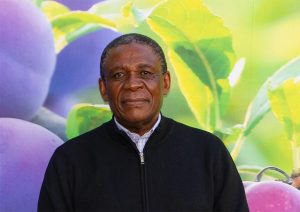
Small-scale farms need to become commercially successful within a policy framework that helps the agriculture sector and South Africa as a whole thrive, according to Wandile Sihlobo, chief economist at the Agricultural Business Chamber of South Africa (Agbiz) and South Africa’s Presidential Envoy on Agriculture.
He was invited to speak at the recent Hortgro Technical Symposium following the 2025 release of The Uncomfortable Truth About South Africa’s Agricultural Sector, a book he co-authored with Prof. Johann Kirsten, director of the Bureau for Economic Research at Stellenbosch University. It outlines ways to unlock agricultural potential and revitalise the rural economy.
A complex farming landscape
According to Agbiz figures released in May, the agricultural sector employed approximately 960 000 people in the first quarter of 2026. Sihlobo noted that this remains below President Cyril Ramaphosa’s National Development Plan (NDP) target of creating one million new jobs in the sector.
“When the NDP was released in 2012, the agricultural sector employed about 720 000 people,” said Sihlobo. “The sector still managed to create some 300 000 jobs since then, despite not enough government land being released or financial support being put in place.”
Sihlobo believes growth is achievable but acknowledges that South Africa’s farming landscape is complex. Only around 15 000 of the 50 000 VAT-registered farming units enjoy an annual gross income of more than R5 million. Many farms operate under significant financial pressure and are far from the picture of wealth often portrayed in public debate.
“Our country’s commercial farmers are not as rich as we think,” he commented, citing 2017 data from StatsSA.
With land reform remaining a politically sensitive issue, Sihlobo argued that increasing black participation in commercial agriculture remains essential for the sector’s long-term stability.
Black South Africans remain on the periphery of land ownership and, consequently, largely outside commercial agriculture. Although black farmers have achieved a significant share of the output in several industries — cattle (34%), mohair (13%), citrus (13%), wool (11%), and deciduous fruit (10%) — black farmers’ output remains low in key sectors, including maize (5%), poultry (4%), viticulture (2%), potatoes (1%), and wheat (1%).
Focus on commercial success
Sihlobo said that too few of the 2.5 million hectares acquired by the government for land reform between 2006 and 2019 have been released to potential farmers, thereby limiting growth of the agricultural pie.
To really benefit South Africa, land reform should not merely create more smallholder farmers countrywide. Sihlobo cautioned against giving one family-run farm to a group of 20 families and expecting them to become commercially viable.
According to Sihlobo, race should not be the sole lens through which to view agricultural development. Instead, more low-productivity and subsistence-based farming systems should be supported to become commercially successful enterprises. He highlighted the potential of the some 280 000 family farms currently earning just below R500 000 to grow and become fully commercial.
“There’s nothing wrong with the small-family-farming sector,” he said. “But if we are talking about jobs, income, and revitalising the economy of South Africa, those are the jobs we need more of, and the commercialisation we must have.”
Sihlobo believes we can learn many lessons from South Africa’s agricultural expansion programmes of the 1930s to 1950s. Coordinated government support at the time included subsidised financing, extension services, market access, investment in land and infrastructure, and even family support.
However, beneficiaries were also evaluated every five years, and unsuccessful farmers lost their farms. “The farmer had skin in the game,” said Sihlobo.
He advocates for government-provided infrastructure, such as fencing, boreholes, animal-handling facilities, and other productive assets, to help establish sustainable farming businesses. But farmers should not expect handouts.
“There should be no free fertiliser, inputs or tractors,” said Sihlobo. “Farmers need to finance these through access to better and more affordable agricultural finance.”
True transformation
Sihlobo said that true agricultural transformation and inclusive growth require moving away from traditional, low-productivity, subsistence-based farming. Key considerations are increased productivity, market orientation, value addition through agribusinesses, technology and innovation, access to finance, and institutional and policy reform.
“This transition requires collaboration between government, farmers’ unions, the private sector, communities, and the like,” he noted.
Sihlobo argued that the government and industry should focus on implementing existing plans, identifying land to be released, issuing title deeds and ensuring access to financing.
“Dust off some plans made in the past and say who will be doing what,” he said while highlighting the critical value of stronger partnerships between commercial farmers, industry organisations, government and development programmes in achieving broader transformation goals.
“Because much of what is needed requires a so-called public good, an effective government is critical,” he added, noting that transformation isn’t the private sector’s responsibility alone.
The government should create an enabling environment, encourage private sector investment, and actively engage with businesses. It should reduce market distortion, promote competitiveness, and lower agricultural investment risks by supporting technology development, testing, and transfer.
Sihlobo praised the Western Cape’s farmers, agricultural department and institutions, infrastructure maintenance and government support systems, suggesting that successful models developed in the province could be adopted elsewhere.
While he acknowledged the significant risks the sector faces, including geopolitical instability, rising fertiliser and other input costs, biosecurity threats, rural crime, and climate change, Sihlobo is optimistic about agriculture’s future and ability to drive economic growth.
“Can you imagine what can be done if all critical measures are put in place?” he asked. “We would be flying!”
Disruption brings opportunities What is South Africa doing to take advantage of upheavals in the global trade landscape? By Anna Mouton. President Donald…
Find a sustainability North Star Humankind is pushing earth systems and natural resources to their limits. Business strategies must meaningfully, positively, decisively, and transformatively deliver…
Focus brings excellence and success A rapidly changing world holds challenges and opportunities for the deciduous-fruit industry. By Engela Duvenage. Grit, application, action, and belief…
Reform holds the key to economic growth Individuals should control communal land. By Engela Duvenage. Prof. William Gumede, an economist and political scientist at the School of…