Louder voices and better planning are needed to address the reshaping of rural towns driven by internal migration. By Engela Duvenage.
Conversations about migration generally focus on foreign migrants, legality, and border control. But underestimating the impact of internal migration on rural towns could undermine the sustainability of South Africa’s agricultural sector.
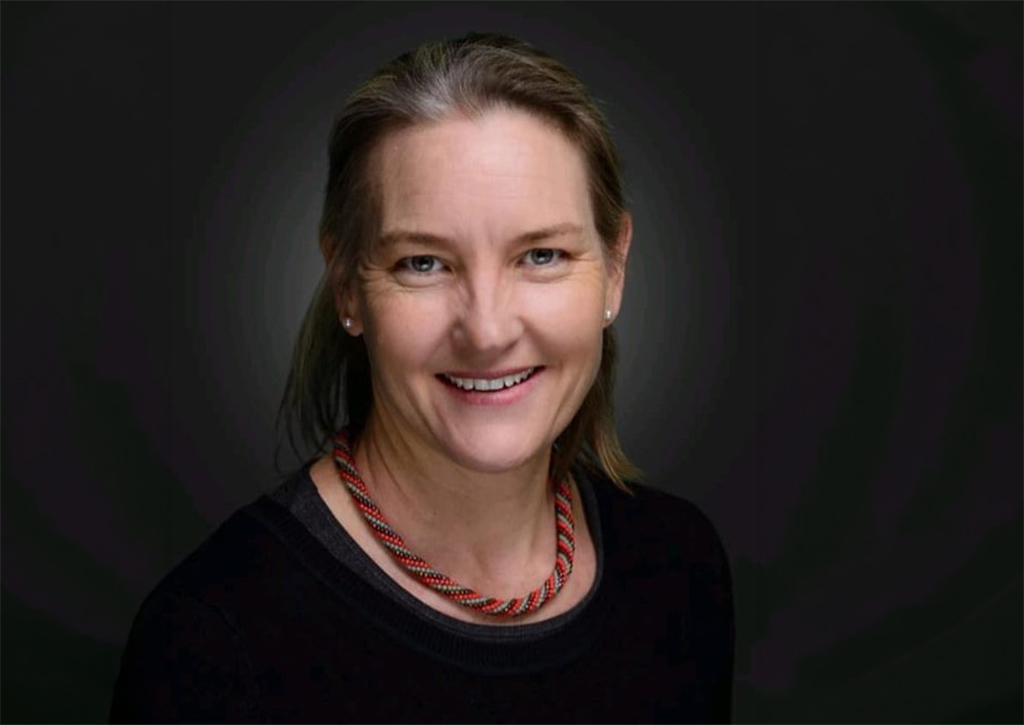
This was the message from Stellenbosch University sociologist Dr Ilse Eigelaar-Meets at the 2026 Hortgro Technical Symposium. Eigelaar-Meets studies community and rural development planning, as well as the social and demographic impacts of migration in the Overberg and on the West Coast.
Births, deaths, and migration
Eigelaar-Meets explained that births (fertility) and deaths (mortality) in communities generally remain stable in the absence of war, changing only gradually over two to three decades. Migration, the other key driver of population change, can cause shifts within a few years.
Internal migration doesn’t increase a country’s population. However, it influences where people live and can drastically change communities or populations within a very short time. New arrivals affect population size, ethnic and language composition, age and sex distribution, labour availability, and the potential for further population growth.
These effects are becoming more prominent in Western Cape agricultural towns, with Grabouw being a prime example. Surveys conducted by Eigelaar-Meets show that its estimated population (in both formal and informal housing) rose from 35 000 in 2009 to 120 000 in 2025, excluding some 11 000 people in Knoflokskraal.
“In this very densely populated area, there are an estimated 1 500 households per square kilometre,” she noted. “However, the most recent StatsSA census puts Grabouw’s total population at 54 000 people.”
The problem is that StatsSA’s population statistics underpin the financing for human settlement planning. Underestimates negatively impact the planning and delivery of services such as healthcare, policing, and education.
Eigelaar-Meets said it matters who is moving. More female migrants can lead to a higher fertility rate, which will eventually necessitate more childcare and educational facilities, and more pre- and postnatal healthcare services.
Skills, jobs, and economics
The skills profile of migrants is important, explained Eigelaar-Meets. As agriculture becomes increasingly mechanised and technologically advanced, many rural economies require workers with more advanced skills.
“Being unskilled nowadays means not being digitally literate,” she said. “It’s no longer simply that somebody cannot read or write.”
Migration not only affects the area receiving migrants, but also the areas from which they come. While the area of origin may lose human capital, it may also be strengthened through remittances sent back to the families and communities left behind.
Gauteng and the Western Cape are traditionally the two South African provinces that are the net recipients of migrants. The 2022 Census suggests that migration to Gauteng is slowing (possibly because of poor infrastructure). The Western Cape continues to attract significant numbers of newcomers, as urbanisation and densification spread to smaller towns outside urban centres.
While most migrants are from the Eastern Cape, people are increasingly moving from around Cape Town to rural towns. This is due to safety concerns, a saturated domestic market for unskilled labour, and a lack of semi-skilled factory jobs in urban areas.
Eigelaar-Meets suspects that planners and policymakers don’t appreciate the extent to which rural populations are changing. Her recent review of the Integrated Development Plans of all Western Cape municipalities since 2001 revealed that the City of Cape Town was the only municipality to mention migration in its plans.
“There’s no realisation within government that we need to plan for this,” she observed, warning that this might lead to population growth being underestimated and services struggling to keep pace with reality.
The logic of migration
According to Eigelaar-Meets, there’s nothing random about internal migration. It is driven by logic and occurs through well-established networks that draw people to certain areas.
In Grabouw, 44% of migrants are young women between 20 and 35 — a reflection of the increased feminisation of the agricultural sector. Around 81% of migrants who moved to Grabouw did so for better economic opportunities. Some 11% did so to be closer to family, and 5% for access to better infrastructure.
“The perception of a better life is enough for migration to occur, irrespective of whether that perception objectively equals reality,” said Eigelaar-Meets. “People do not move for thousands of rands, but because of real poverty.”
She recalled asking a migrant why he had moved from the Eastern Cape to Kleinmond despite limited job opportunities in the seaside town. He answered that back home, he was paid R5 a week to herd goats. In Kleinmond, he could at least find enough work to earn R100 per week.
Regarding their plans, 83% of migrants surveyed in Grabouw intended to settle rather than move away.
“Fewer seasonal workers are returning home after harvest time,” said Eigelaar-Meets. “It doesn’t make sense for them to go back. Even outside of the season, there are still more opportunities than at home for them to become economically stronger.”
Rapid population growth leads to significant challenges. Housing shortages contribute to the expansion of informal settlements, while schools, healthcare, water and sanitation come under pressure.
Nonetheless, Eigelaar-Meets pointed out that migration is inevitable. Understanding its consequences, where migrants come from, who they are, and why they move must factor into development planning.
“The stability of communities, especially those in our small rural agricultural towns, impacts the sustainability of the agriculture sector,” said Eigelaar-Meets. Therefore, she urged growers to understand how migration influences their business and region, and how to apply this knowledge in looking after their workforce.
Fruit industry must raise its voice The South African fruit industry needs a stronger voice to influence relevant, practical, and standardised sustainability requirements. By Engela Duvenage.…
Sustainability gets its own programme Hortgro has established the Resource Management and Sustainability Programme to help ensure the future of the deciduous-fruit industry. By Anna…
Find a sustainability North Star Humankind is pushing earth systems and natural resources to their limits. Business strategies must meaningfully, positively, decisively, and transformatively deliver…
Growing the agricultural pie is key Meaningful agricultural transformation requires more than just unlocking land. By Engela Duvenage. Small-scale farms need to become commercially successful within…