A photosynthesis inhibitor promotes fruitlet drop in apples and pears. By Anna Mouton.
Metamitron is a triazinone herbicide originally developed in the 1970s for weed control in sugar beets. This may sound niche, but annual global sugar beet output is nearly 300 million tonnes, yielding about a quarter of the world’s sugar.
More recently, metamitron has also been adopted for chemical thinning of apples and pears. “Metamitron differs from the hormone-based thinners,” says Schalk van der Merwe, National Marketing and Technical Manager at Adama South Africa. “It has a unique mechanism of action.”
Creating a carbohydrate deficit
Metamitron binds to an amino acid in a critical protein in photosystem II, a light-capturing protein complex in plant chloroplasts. Photosystem II transfers energy from photons to electrons, which then fuel other biochemical reactions, notably the synthesis of carbohydrates.
“A metamitron application is almost like shading the tree,” says Van der Merwe. “It inhibits photosynthesis for a couple of days.”
The temporary drop in carbohydrate production stresses the tree and intensifies competition between developing fruitlets, leading to abortion. Anything that simultaneously limits carbohydrates, including poor reserve status, high temperatures, and overcast conditions, strengthens the thinning effect.
“Metamitron has the advantage that it has a wide temperature window of 10–25 °C,” says Van der Merwe. “It can be applied under cooler conditions than hormone-based thinners. Temperatures below 10 °C can increase thinning, because the tree’s metabolism slows naturally at very low temperatures.”
Like other chemical thinners, metamitron can over-thin when it is applied to highly stressed trees, for example, when soils are waterlogged. Metamitron also causes more fruitlet drop when applied to trees under nets.
Thinning in different windows
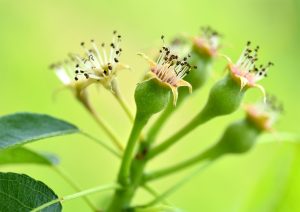
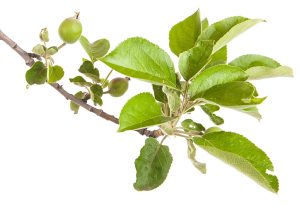
In both apples and pears, metamitron is registered for application from the end of flowering up to 18-mm fruitlet diameter. “A general rule is that the earlier you apply the product, the more effective it is,” says Van der Merwe. “The 6-mm window is the most effective, and the bigger the fruit become, the smaller the thinning effect will be.”
Metamitron doesn’t thin flowers, probably because there is little photosynthesis to inhibit at this stage, and the flowers depend on reserves.
“A very common use of metamitron is a single application in the 10–12-mm window,” says Van der Merwe. For more aggressive thinning, metamitron is best applied at an average fruitlet size of 6 mm, and can even be sprayed twice, with the second application at least a week after the first.
Although metamitron is registered for use in the 15–18-mm window, Van der Merwe recommends thinning before this. “That is a very late window, depending on the circumstances,” he says. “The cultivar and block influence the results, but you could have insufficient thinning.”
In fact, he thinks spraying too late is one of growers’ most common mistakes. “They get to 25-mm fruit size, and then they realise there are too many fruit on the tree,” he says. “Naturally, they want to try chemical thinning before hand-thinning, but even if you see an effect at that stage, it will be tiny.”
Tips for successful application
In contrast to hormone-based thinners, which have registered dose ranges, metamitron is registered for a single dose.
“We’ve observed that the spray coverage is far more important than the concentration of the spray solution,” says Van der Merwe. “Regardless of the tree size, if you have good coverage, the registered dose works very well.”
Whereas hormone-based thinners should usually be applied under slow-drying conditions, metamitron is best applied to dry leaves.
“The main reason is that wet leaves can have higher uptake, which could increase the risk of phytotoxicity,” explains Van der Merwe. “There is no need to apply metamitron under slow-drying conditions.”
Metamitron applications can be repeated, or a different chemical thinner can follow an early application, but metamitron should not be applied more than twice per season.
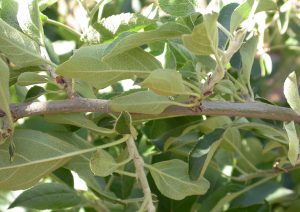
Trees sometimes exhibit transient phytotoxicity, usually manifested as leaf yellowing or marginal leaf burn, which resolves within 2–3 weeks. There is no fruit damage.
Hot weather (temperatures above 30 °C) seems to increase phytotoxicity. Additionally, metamitron should not be mixed with other plant growth regulators, fungicides, insecticides, boron, or adjuvants.
The learning curve
“Chemical thinning recommendations are very difficult because the effect is absolutely site specific,” says Van der Merwe. “I think each grower must gain experience with the product on his own farm.”
For first-time users, he suggests a single application in the 10–12-mm window.
“Within 7–12 days, you will usually see which fruitlets are going to drop, as their stalks turn yellow,” says Van der Merwe. “So, you can decide whether you need a follow-up application, and what product to choose.”
Currently, metamitron is registered for Braeburn, Cripps Pink, Fuji, Golden Delicious, Granny Smith, and Royal Gala apples, and Abate Fetel, Early Bon Chrétien, Flamingo, and Forelle pears.
Metamitron is not registered for any stone fruit. It is phytotoxic to stone fruit, causing severe leaf scorching.
According to Van der Merwe, the key to success with metamitron is experience. “We have seen growers try it out. Within two to three seasons, they can use the product very effectively on their farms,” he says. “It’s a relatively easy product to apply.”
Related Posts:
Thinning 101 Understanding natural fruit drop is essential for successful chemical thinning. By Anna Mouton. Chemical thinning to remove surplus flowers and…
Who’s who in chemical thinners? And what are best practices for use. By Karen Theron, Schalk Reynolds, and Schalk van der Merwe. Most fruit trees…
How do the different chemicals thin? Understanding natural and assisted abscission. By Karen Theron. Fruit growers use several chemical thinning compounds to control the number of…
Paardekloof Maximising returns on investment. By Anna Mouton. “To earn more money, you need to put more apples into the export…
ACC The newly registered 1-aminocyclopropane-1-carboxylic acid (ACC) increases the scope for late thinning of apples. By Anna Mouton. “ACC became available…
Rewriting the rules The changing landscape of international trade. By Anna Mouton. Stephanie van der Walt of Agbiz Fruit is an attorney and…